Quick verdict
Five hundred metres of climbing across a hundred kilometres, and a twenty-seven percent DNF rate. The terrain is not what beats you here; the heat is. Start in the dark among the temples, and be honest with yourself about what thirty degrees does to a flat course.
Course at a glance
A loop from the Terrace of the Elephants in Angkor Thom out through the archaeological park: Prasat Ta Som, the 700 steps of Phnom Bok, Banteay Samré, East Mebon, Pre Rup, Ta Nei and the French Bridge, then eight kilometres back to the start. Sandy paths, rice fields and root-laced forest track.
Where you'll feel it
Not on the steps — after them. On the hundred, the back half from 65 km runs into the afternoon at over thirty degrees, across open paddy with no shade and no gradient to break the rhythm. Nothing to do but keep turning over.
Best chance to push
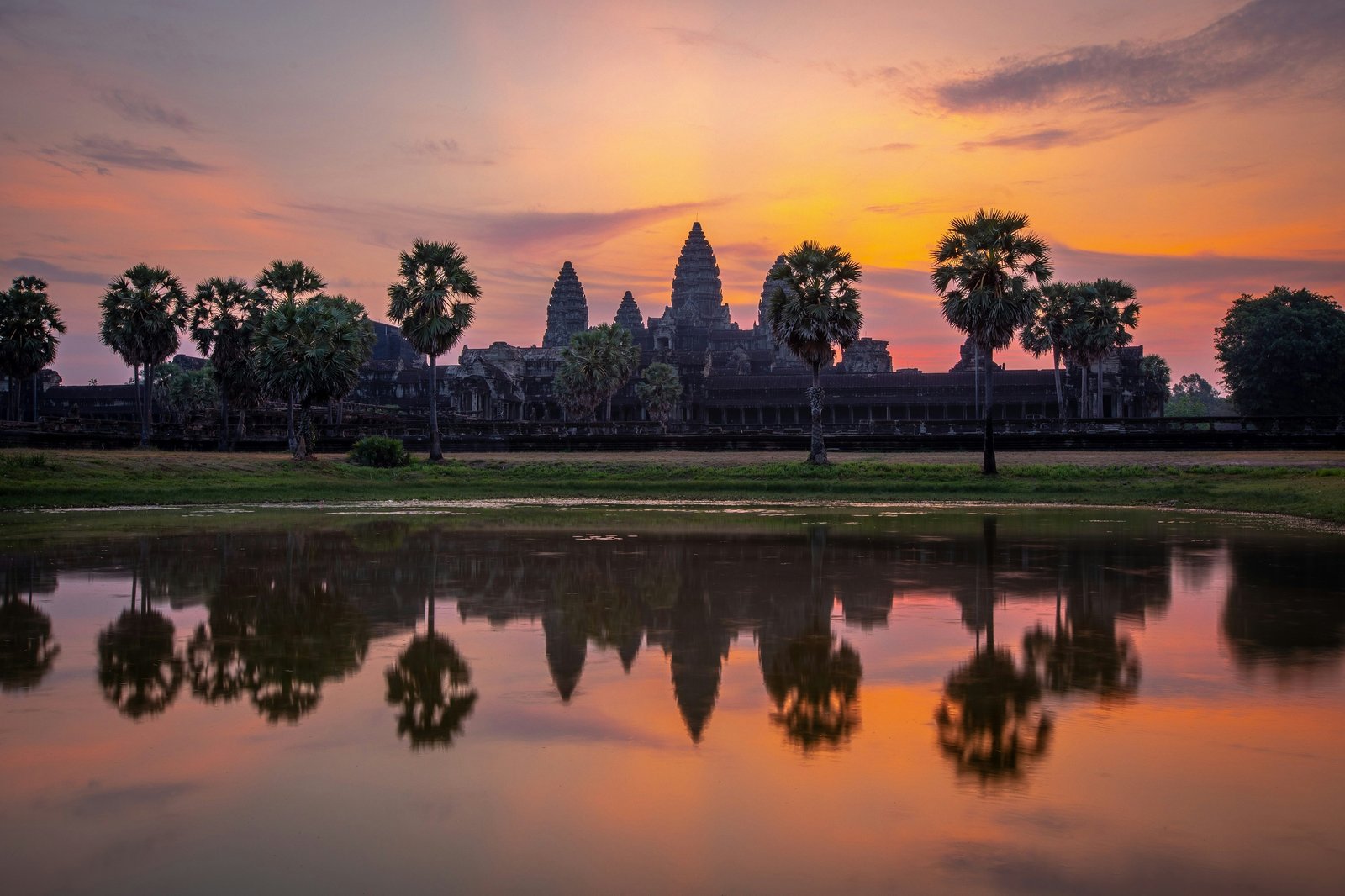
The first two hours. Headtorches sweeping across Angkor Thom, the Bayon's faces in the dark, and sunrise at 6:31 catching you deep in the park. It is cool, it is quiet, and it does not last.
Three things to know
- The 20-hour cutoff on the hundred is tighter than the last two years' actual tail finishers — 21:53 in 2026 and 21:29 in 2025. Plan against 20:00, not against historical results.
- Your entry includes a one-day Angkor pass for race day only, and the regulations state plainly that it does not admit you to the temples. Buy a separate multi-day pass if you want to see Angkor as well as run it.
- A cap is mandatory on every distance including the 10 km, and the hundred requires 1.5 litres of carrying capacity with aid only every 10 to 12 kilometres. Enter before 31 August — the price steps from €159 to €179 on 1 September.
Race-day weather
January is the dry season and still tropical: 22°C at the four o'clock gun, 30 to 31°C by early afternoon, around 60% humidity and almost no chance of rain. Pace off the heat and your fluid, never off the gradient.
What runners wear
Light, pale and loose, with a cap you cannot lose — it is compulsory. Carry more water than the distance suggests. Trail shoes for sand and roots rather than anything aggressive; there is nothing technical here to grip.
Typical finish times
The 2026 hundred was won in 9:02:47, but the middle of the field came home around eighteen hours — double the winner. A hundred and nine of a hundred and forty-nine starters finished. That gap between the front and the middle is the heat, written down.
Worth the trip?
Four hundred square kilometres of UNESCO temple complex closed around a footrace, at dawn, on foot. Nothing in temple tourism gives you that. Accept that the heat is the event, that Siem Reap is a long way, and that the operator is small and its website out of date.
Save Ultra Trail Angkor to your season and RunCalendar reminds you the morning entries open and before they close. Free on iPhone, no account needed.
Written by RunCalendar from the organiser's own published information and past editions. Entry states are checked nightly; everything else is written to last the season. This page is rebuilt every night from the RunCalendar catalogue.